


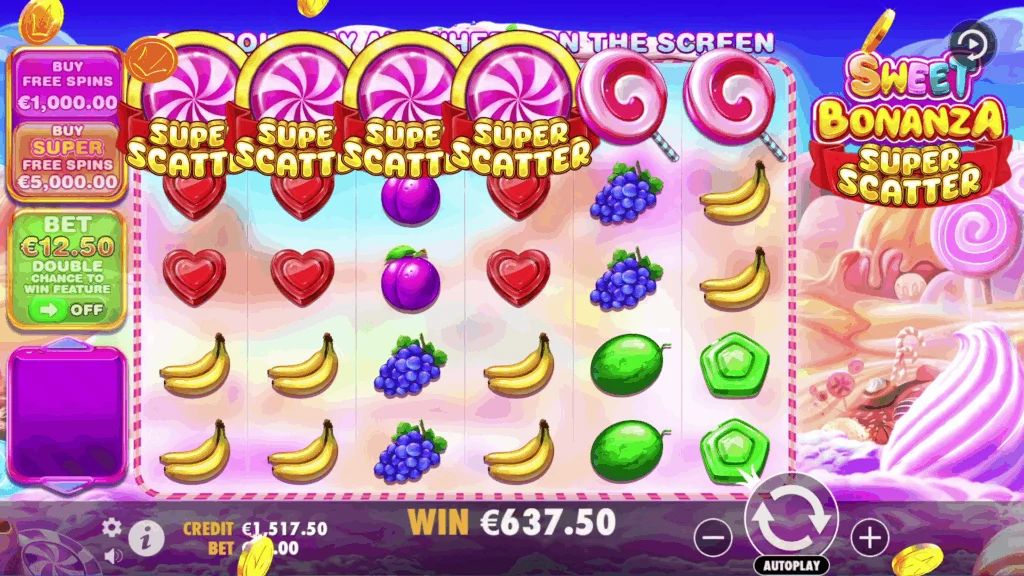
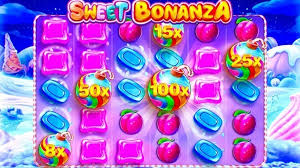
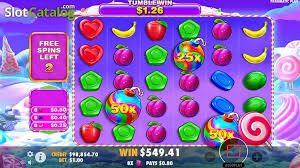
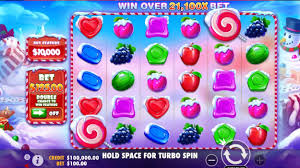
Sweet Bonanza 2 Slot Overview
Sweet Bonanza 2 represents the evolution of one of the most recognisable multiplier-based slot frameworks developed by Pragmatic Play. Built around a high-volatility mathematical profile, the game is structured to deliver irregular but potentially significant payout events rather than frequent low-tier returns.
The slot operates within a cluster-based grid environment rather than traditional paylines. Winning combinations are formed when matching symbols land in groups across the reels, triggering sequential tumble mechanics that allow multiple outcomes to occur within a single paid spin.
From a product perspective, Sweet Bonanza 2 is positioned as a momentum-driven slot — designed for players who understand variance and are comfortable navigating fluctuating payout cycles.
The visual layer maintains a bright, candy-themed identity, but beneath the surface sits a calculation model engineered for controlled unpredictability.

Product Positioning
Within the broader slot ecosystem, Sweet Bonanza 2 sits firmly in the upper volatility tier, where gameplay is defined less by constant reinforcement and more by episodic reward sequences.
This positioning makes the slot particularly suitable for players who prefer extended session arcs rather than immediate outcome feedback.
Key structural characteristics include:
- elevated multiplier potential
- cascading win chains
- bonus-trigger amplification
- dynamic payout scaling
Rather than attempting to simulate consistent returns, the game leans into probabilistic distribution — allowing quieter sessions to be offset by occasional high-impact rounds.
This design philosophy is widely associated with modern multiplier slots and reflects a shift toward mathematically expressive gameplay models.
Core Gameplay Identity
Sweet Bonanza 2 is fundamentally built around event stacking — a mechanic where multiple features may converge during a single sequence.
For example, a tumble chain may combine with multiplier symbols, which can then compound during bonus rounds. This layered interaction model introduces variability not just in win size, but in the path required to reach it.
The absence of paylines further reinforces this identity. Instead of directional wins, the grid encourages spatial pattern recognition while maintaining outcome randomness through certified number generation systems.
Players should expect gameplay to alternate between:
- low-activity stretches
- moderate cluster hits
- sudden multiplier escalations
This rhythm is intentional and reflects the volatility architecture of the game.
Designed Player Profil
Sweet Bonanza 2 is not engineered for uniform player behaviour. Its structure naturally aligns with specific engagement styles.
The slot may particularly appeal to players who:
- understand variance-driven payout models
- prefer feature-rich environments
- remain comfortable during quieter spin cycles
- approach sessions with predefined financial boundaries
- prioritise potential over frequency
Conversely, players seeking rapid reinforcement loops may find the tempo comparatively measured.
Understanding this alignment helps support informed game selection — an important component of controlled gameplay environments.
| Attribute | Operational Profile | Player Implication |
|---|---|---|
| Volatility | High variance distribution | Expect fluctuating payout cycles rather than steady feedback. |
| Payout Behaviour | Multiplier-driven clusters | Escalation potential during tumble chains and feature states. |
| Session Rhythm | Momentum-oriented | Measured tempo with occasional high-intensity spikes. |
| Bankroll Sensitivity | Medium–High | Structured budgeting supports controlled participation. |
| Feature Intensity | Bonus-amplified states | Activity increases noticeably when bonus logic is active. |
Core Mechanics: Grid, Clusters, and Tumble Sequences
Sweet Bonanza 2 is built around a cluster-based grid format rather than fixed paylines. Wins occur when identical symbols land in sufficient quantity across the reel window, forming groups that meet the game’s internal threshold. This structure changes how sessions feel: instead of “line chasing”, outcomes are defined by spatial clustering and chain reactions.
Once a winning cluster appears, the tumble (cascade) mechanic activates. Winning symbols are removed, and remaining symbols shift to fill the space, allowing new symbols to drop in. A single paid spin can therefore generate multiple result states — effectively creating a short “sequence” rather than a single resolution.
From an operator perspective, tumbles are not just visual. They materially influence volatility expression by enabling compound wins inside one spin cycle. In high-variance games, this often becomes the key pathway through which payout peaks occur.
Key implications of the tumble model:
- a spin may resolve through multiple payout events
- intensity can shift rapidly within one round
- some of the most meaningful outcomes occur when multiple tumbles chain together
- session rhythm feels less linear than classic line slots
This design supports the slot’s event-driven identity: the base game may remain measured, but when the tumble engine “stacks”, it can produce concentrated volatility.
Multiplier Logic and Payout Amplification
Sweet Bonanza 2 is positioned around multiplier escalation. Multiplier symbols can appear in relevant states and, depending on the feature layer, may combine in ways that amplify the final payout for that sequence.
The critical point is that multipliers do not “guarantee” outcomes. They amplify only when paired with qualifying symbol clusters. This makes the game mechanically two-stage:
- the grid must produce a valid cluster outcome
- multipliers must align with that cluster outcome to materially elevate the result
Because of this two-layer structure, players may observe long stretches of standard cluster hits, followed by occasional sequences where multipliers create disproportionately higher outcomes.
This is a typical characteristic of upper-tier volatility products: the model is designed to compress a portion of the value distribution into fewer, higher-impact events.
Bonus States and Feature Density
While the base game defines the session’s baseline tempo, bonus states generally represent the moment where Sweet Bonanza 2 expresses its full volatility range. Feature layers typically increase:
- tumble chain intensity
- multiplier frequency or stacking potential
- concentration of payout outcomes into shorter sequences
This is why many sessions feel “quiet” until a feature state is reached — not because the base is inactive, but because the design allocates much of the slot’s expressive value to bonus-aligned sequences.
From a product presentation standpoint, this is important to communicate clearly: the slot’s identity is not “constant feedback”; it’s “variance with occasional high-density feature windows”.
Interactive Volatility Curve
RTP, Volatility, and What Those Numbers Actually Mean
Sweet Bonanza 2 is typically evaluated through three metrics: RTP (return-to-player), volatility, and maximum win potential. These values are useful for product comparison, but only when interpreted correctly.
RTP describes a theoretical long-term return ratio across an extremely large number of spins. It is not a session guarantee, and it does not describe how outcomes will feel in short play windows. For high-variance slots, two sessions with the same theoretical RTP can produce entirely different user experiences.
Volatility is the more practical indicator of session rhythm. In upper-tier volatility slots, value distribution is intentionally uneven: a larger proportion of the slot’s “value” may arrive in fewer events, with quieter sequences in between.
Maximum win potential describes the upper ceiling of a single sequence under optimal alignment conditions. This is a design boundary, not an expectation. Most gameplay is defined by distribution, not by peak scenarios.
From an operator perspective, the most reliable way to explain these metrics is to translate them into session behaviour:
- RTP explains long-term mathematical balance
- volatility explains short-term variance and “feel”
- max win explains the theoretical top-end boundary
Symbol System and Outcome Formation
Sweet Bonanza 2 uses a cluster-based symbol model. Instead of matching along lines, wins require a minimum quantity of identical symbols forming groups across the grid.
This model creates two important differences compared to paylines:
- symbol value interacts with space more than direction
- a single tumble chain can create multiple cluster formations in one round
In practical terms, the player experience becomes less predictable in a “linear” sense. A visually similar grid state may produce different outcomes depending on cluster thresholds and tumble progression.
The symbol layer typically includes:
- standard symbol groups (frequent)
- premium symbols (less frequent)
- feature-related symbols that influence multiplier behaviour (context-dependent)
What matters most for session outcomes is not individual symbol identity but the frequency of qualifying clusters and how often a tumble chain extends into additional outcomes.
Bonus Entry Logic: Trigger, Density, and Variance
Bonus states exist to increase feature density. In Sweet Bonanza 2, bonus entry is generally designed to be infrequent enough to preserve value, but frequent enough to remain a meaningful part of the overall session identity.
A high-variance product typically uses a bonus structure to concentrate:
- multiplier stacking opportunities
- chain length potential
- high-impact event probability windows
Players should interpret bonus rounds as an intensification layer, not as a promise of outsized returns. Many bonus rounds resolve with moderate outcomes; the slot’s higher peaks usually occur when multiple supportive conditions align within the same sequence.
This is why bonus states can feel inconsistent — they are engineered to express variance, not to smooth it.
Interactive Game Profile Table
| Profile | Fit | Why it fits (operator view) | What you’ll notice | Practical boundary |
|---|---|---|---|---|
| Casual control | ~ | High variance can compress value into fewer events. | Some sessions may feel quiet without entering feature density. | Prefer fixed limits and conservative stakes. |
| Structured play | ✓ | Balanced pacing supports variance without reactive decisions. | More room for tumble chains to express distribution. | Define session length before starting. |
| Variance tolerant | ✓ | The slot’s model rewards patience across cycles. | Bonus states define most of the intensity. | Use budgeting and avoid stake escalation. |
| High impulse risk | ✕ | Short windows + high variance can trigger loss-chasing behaviour. | Outcome swings may feel disproportionate. | Consider lower-volatility titles instead. |
Bonus Round Architecture: How the Feature Layer Changes the Game
Sweet Bonanza 2’s bonus design exists to increase feature density — not to “guarantee” a particular outcome. In high-variance slots, the base game establishes rhythm, while the bonus layer concentrates the slot’s most expressive volatility inside a smaller set of rounds.
This architecture typically changes three things at once:
- more outcome states per round (tumble chains tend to extend further)
- greater multiplier relevance (amplification becomes more central to the payout pathway)
- wider distribution (more separation between low, medium, and high bonus outcomes)
From a product standpoint, this is why players often perceive bonus rounds as the “real” identity of the slot. The slot is engineered to feel measured in base play and substantially more dynamic during feature states.
Importantly: bonus activation is part of the game’s probability distribution. It is not a skill trigger and cannot be forced through pattern play.
Multiplier Accumulation: What Drives Larger Bonus Outcomes
In Sweet Bonanza 2, multiplier behaviour is a key component of payout amplification. However, multipliers only meaningfully affect results when they intersect with qualifying symbol clusters.
The highest-impact sequences tend to share a similar structure:
- a bonus state creates a higher number of meaningful tumble interactions
- multipliers align with cluster events within that interaction window
- cluster value and multiplier stacking converge in the same chain
This is why bonus rounds can feel inconsistent. The slot’s design intentionally allows many bonus rounds to resolve with moderate outcomes while reserving its higher peaks for occasional alignment events.
From a compliance perspective, it’s important to frame this correctly: bonus rounds increase volatility. They do not remove it.
Managing Expectations: Bonus Outcomes Are a Distribution
Operator-facing analytics typically interpret bonus performance as a distribution curve. Instead of asking “how often do I win big?”, the more accurate question is:
“How often does the bonus deliver low, medium, and high outcomes — and how wide is the spread?”
In upper-tier volatility games:
- low and mid-range outcomes are common
- high outcomes occur less frequently
- peak scenarios are rare and require multiple favourable conditions
This distribution model is deliberate. It protects the integrity of the math design while sustaining the slot’s identity as a high-expression product.
Interactive Bonus Impact Graph
Responsible Play Layer: Keeping Sessions Controlled
Sweet Bonanza 2 is engineered as a high-variance slot. That profile can be engaging, but it also requires stronger session discipline than lower-volatility titles.
A controlled approach is simple and operational:
- define a session duration before starting
- set a spend limit that does not interfere with essential obligations
- avoid increasing stakes in response to losses
- take breaks when emotional state changes (irritation, urgency, impatience)
High-volatility products compress value into fewer events. This can create stretches where outcomes feel quieter. The correct response is not escalation, but boundary discipline.
If gameplay stops feeling recreational, the appropriate action is a pause and—where needed—access to independent support resources via the Responsible Gaming page.
Fairness and Integrity: RNG-Based Outcome
Sweet Bonanza 2 outcomes are generated through certified random number processes. This matters because it defines the limits of control: no pattern, timing method, or “system” can influence statistical probability.
From a platform integrity perspective, the game environment is designed to ensure:
- outcomes remain independent across spins
- results are not influenced by user device type
- session behaviour does not “unlock” better probability states
- technical reliability is supported through server-side logging
Where gameplay is interrupted (for example, connectivity loss), round settlement is typically determined by platform records. This supports dispute resolution and protects both player and operator against inconsistent outcome interpretation.
Device Experience: Mobile and Desktop Parity
Sweet Bonanza 2 is built for multi-device use. In operator environments, parity is maintained through:
- responsive rendering for reel layouts and UI panels
- consistent feature behaviour across browsers
- server-confirmed round settlement
- performance monitoring to reduce lag spikes during high-activity sequences
The practical implication is consistency: a bonus sequence behaves the same way on desktop and mobile. Device choice changes the interface footprint, not the underlying game model.
Interactive Comparison Matrix
| Title / Category | Mechanics | Volatility | Feature Density | Session Fit |
|---|---|---|---|---|
| Sweet Bonanza 2 | Clusters Tumbles Multipliers | High | 9/10 | 8/10 |
| Classic Sweet Bonanza style | Clusters Tumbles | High | 8/10 | 7/10 |
| Lower-volatility classic slot | Paylines Steady hits | Lower | 4/10 | 9/10 |
| High-multiplier bonus slot | Multipliers Bonus-driven | High | 7/10 | 7/10 |
Reading the Game Correctly: Paytable, Symbols, and Feature Notes
Sweet Bonanza 2 provides its rule set and paytable directly inside the game interface. For an operator-grade understanding, the most useful approach is not to memorise symbol values, but to focus on the relationship between cluster thresholds, tumble behaviour, and feature density.
A paytable is best read as a mapping of:
- which symbols are more likely to form qualifying clusters
- which symbols contribute more value when clusters land
- how feature symbols (where applicable) interact with payout amplification
In high-variance products, the paytable is only one layer. The more meaningful driver is often how often tumble chains extend into additional outcomes and how multipliers coincide with those outcomes.
If a player’s expectation is “consistent returns”, the paytable will not change that experience. It simply describes how value is calculated when events occur.
Session Boundaries: Operator-Level Guidance (Without Hype)
A high-volatility slot requires disciplined session boundaries. The goal is not to maximise time played, but to maintain controlled participation.
A practical and neutral session framework:
- set a time window before you start (and keep it)
- avoid stake escalation after losses
- treat bonus rounds as variance, not as recovery events
- step away if play becomes emotionally driven (irritation, urgency, frustration)
This guidance is not designed to “optimise” outcomes. It is designed to reduce the likelihood of reactive decisions in a product category where swings are part of the intended experience.
Technical Governance: Consistency Across Devices and Dispute Clarity
Sweet Bonanza 2 is designed for mobile and desktop parity, meaning feature behaviour and outcome generation remain consistent regardless of device. Differences are limited to interface footprint and performance characteristics of the user environment (browser, connection stability, device resources).
From an integrity standpoint, important operational protections typically include:
- server-side logging of game rounds and settlement events
- controlled handling of interrupted rounds (connectivity loss)
- consistent balance reconciliation based on recorded round outcomes
- technical review mechanisms for result disputes
This is the infrastructure layer that supports fair play: outcomes are determined by certified random processes, then recorded for auditability and dispute handling.
Key Takeaways
Sweet Bonanza 2 concentrates impact into fewer, higher-density sequences. The tumble engine and multiplier alignment are the main pathways through which larger outcomes emerge.
Sessions may alternate between quieter stretches and occasional spikes. This is consistent with the slot’s volatility profile and should be approached with predefined boundaries.
Bonus states increase feature density and widen the outcome distribution. They do not remove volatility and should not be used as a recovery mechanism after losses.
Outcomes are generated through certified random processes and recorded for auditability. Device choice affects interface footprint, not the underlying probability model.
Understanding Gameplay Within a Structured Environment
Sweet Bonanza 2 is designed as a mathematically expressive slot where distribution — rather than frequency — defines the experience. This distinction matters because it reframes how sessions should be interpreted. Instead of expecting continuous reinforcement, players should recognise that the game allocates much of its statistical weight to intermittent sequences.
High-variance environments naturally produce contrast between quieter periods and moments of elevated activity. This contrast is not an irregularity; it is an intentional component of the slot’s design architecture. When viewed through an operator lens, the objective is not to smooth volatility but to ensure that outcomes remain governed by transparent and certified probability structures.
Approaching gameplay with this awareness supports more informed decision-making and reduces the likelihood of misinterpreting normal variance as an operational anomaly.
Probability Awareness and Outcome Independence
Each spin in Sweet Bonanza 2 is resolved independently through random number generation processes. Independence means that previous outcomes do not influence subsequent results, regardless of whether a session has been active for several minutes or several hours.
This principle is fundamental to regulated gaming environments. It ensures that:
- streaks do not signal a forthcoming reversal
- delayed features are not “building toward” a trigger
- perceived patterns remain cognitive rather than mathematical
Understanding independence helps align expectations with the statistical nature of the product. Players who recognise that randomness cannot be anticipated are better positioned to maintain controlled engagement.
Interpreting Session Variability
Session variability is often misunderstood. A measured stretch does not indicate reduced fairness, just as a concentrated sequence does not imply altered probability. Both states exist within the same mathematical framework.
Variance can be described as the range between typical and less typical outcomes. In a high-volatility slot, that range is intentionally wider. Some sessions resolve near the centre of the distribution, while others may fall toward either end.
From a behavioural standpoint, the healthiest interpretation of variability is neutrality — allowing outcomes to occur without attempting to assign predictive meaning.
Players are encouraged to periodically reassess their session state and disengage when gameplay stops feeling recreational.
Feature Visibility Versus Feature Frequency
Modern slot design often emphasises visual clarity around features. Symbols, animations, and transitions are structured so that players can immediately recognise when a meaningful state is approaching or active.
However, visibility should not be confused with frequency.
A feature may be clearly communicated while still remaining statistically infrequent. This balance supports transparency without altering the underlying probability model.
In Sweet Bonanza 2, bonus-related states are deliberately prominent because they represent moments where volatility becomes more expressive. Their visibility improves comprehension; it does not modify distribution.
Maintaining a Recreational Perspective
Regulated gaming frameworks consistently emphasise that gambling is a form of entertainment rather than a financial strategy. This distinction is especially relevant in high-variance environments, where emotional interpretation of outcomes can develop quickly if boundaries are not defined.
A recreational perspective is typically supported by:
- predetermined spending limits
- time awareness
- comfort with stepping away
- acceptance of both positive and negative variance
These behaviours help ensure that engagement remains proportional and intentional.
Should gameplay begin to feel pressured or emotionally charged, pausing the session is considered an appropriate and responsible response.
Platform Responsibility and Player Autonomy
Operators are expected to provide environments that prioritise transparency, fairness, and technical reliability. At the same time, players retain autonomy over participation decisions.
This dual structure creates a balanced ecosystem:
Operator responsibilities generally include:
- maintaining certified game integrations
- supporting secure transaction environments
- providing access to responsible gaming tools
- ensuring clarity around rules and mechanics
Player responsibilities typically include:
- reviewing game information before participating
- selecting stakes aligned with personal limits
- recognising when to pause or stop
- seeking support if gambling behaviour becomes difficult to manage
When both sides of this structure function as intended, the result is a stable and accountable gaming environment.
Technical Stability and Round Resolution
Game stability is an often overlooked aspect of player protection. Modern platform infrastructure is built to support consistent round handling, even when interruptions occur.
If a session is disrupted — for example, due to connection loss — the outcome of any initiated round is normally determined by the server record rather than by the temporary state of the user interface. This prevents duplicate resolutions and ensures balance accuracy.
Such mechanisms exist not only for operational integrity but also for dispute clarity, allowing gameplay events to be verified if questions arise.
Regulatory Alignment and Ongoing Oversight
Online gaming environments operate within structured regulatory expectations that emphasise fairness, consumer protection, and operational transparency. While specific frameworks vary across jurisdictions, the underlying objectives remain broadly aligned.
These objectives typically include:
- safeguarding vulnerable individuals
- preventing misleading representations
- supporting secure data practices
- ensuring games operate as certified
Slots like Sweet Bonanza 2 are integrated into platforms that are expected to meet these standards. Oversight mechanisms — whether internal, third-party, or regulatory — exist to reinforce confidence in the gaming environment.
Recognising When to Step Back
One of the clearest indicators of controlled participation is the ability to disengage without hesitation. Stepping back is not a reaction to a specific outcome; it is a behavioural safeguard that supports long-term balance.
Situations where a pause may be beneficial include:
- extending a session beyond its planned duration
- increasing stakes to influence outcomes
- feeling urgency to continue
- treating gameplay as a recovery mechanism
Pauses help restore perspective and prevent short-term emotional states from shaping longer-term behaviour.
Independent support organisations are available in many regions for individuals seeking additional guidance related to gambling habits.
A Stable Framework for Game Engagement
Sweet Bonanza 2 operates within a structure that combines probability-driven outcomes, transparent mechanics, and technical governance. Understanding this framework allows players to approach the slot with clearer expectations and a stronger sense of control.
Rather than attempting to interpret randomness, the more effective approach is to focus on boundaries, awareness, and informed participation.
When viewed through this lens, the slot functions as intended — a mathematically governed entertainment product within a regulated digital environment.